Resources

Signage Materials Guide: Choosing the Right Material for Your Business Sign

Acrylic, aluminium composite panel, stainless steel, aluminium, PVC foam, steel, brass, vinyl, banner material and polycarbonate compared. Use this guide to match a material to where your sign will go, how long it needs to look good and what you want to spend.

Not sure what to choose? WhatsApp us on +254 751 997 079 with a photo of the space.
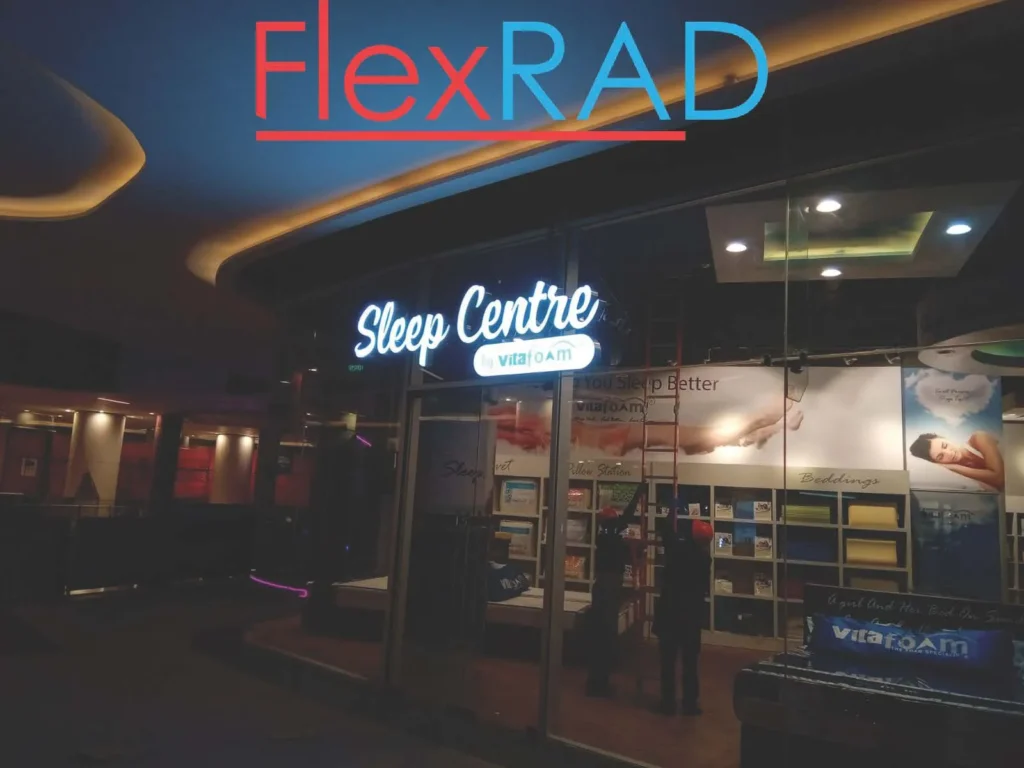
Raised 3D letter sign installed by Flexrad at Two Rivers Mall, Nairobi

Quick material selector

Start with what the sign is for. These are typical starting points; the right choice also depends on size, exposure, lighting and budget.

  • Shopfront or building name in 3D lettersAcrylic, stainless steel or aluminium letters, often on an ACP backing panel. PVC foam for indoor or budget letters.Read more ↓
  • Illuminated light boxSteel or aluminium frame with an acrylic, polycarbonate or backlit banner face.Read more ↓
  • Reception logo wallAcrylic, brushed stainless steel or aluminium, flat-mounted or on stand-offs.Read more ↓
  • Door, room and directory signsAcrylic, aluminium or PVC foam with printed or cut vinyl.Read more ↓
  • Safety and OSHA signsPrinted vinyl on PVC foam, ACP or aluminium, depending on location.Read more ↓
  • Road and directional signsAluminium or ACP faces with reflective vinyl, on steel posts.Read more ↓
  • Commemorative and opening plaquesBrass, aluminium, stainless steel or acrylic.Read more ↓
  • Exhibitions, events and promotionsBanner material, printed vinyl and PVC foam, often on frames.Read more ↓

Signage material comparison

A side-by-side view of the materials most often used for commercial signs in Kenya.

Comparison of signage materials by application, advantages and limitations
MaterialTypical applicationsAdvantagesLimitations
Acrylic (Perspex)3D letters, reception signs, door signs, light box faces, display standsClean laser-cut edges, glossy finish, many colours, opal grades diffuse LED lightScratches more easily than metal, can crack on impact, large thin sheets may bow
Aluminium composite panel (ACP)Fascia panels, sign trays, backing boards for 3D letters, flat outdoor signsFlat, rigid and lightweight, takes vinyl and print well, suits outdoor useCan dent, exposed edges show the core, core type matters where fire performance is specified
Stainless steelPremium 3D letters, reception logos, plaques, halo-lit signsHigh-end brushed or polished look, strong, good corrosion resistanceHighest cost, heavier, polished finishes show fingerprints, grade affects corrosion performance
AluminiumPlaques, sign plates, road sign blanks, fabricated letters and framesLight, does not rust, engraves and powder-coats wellSofter than steel and can dent; bare finish dulls without coating
PVC foam boardIndoor signs, room signs, exhibition graphics, budget 3D lettersLight, low cost, easy to cut, print and paintSofter surface, can warp or fade in direct sun and heat, best indoors or sheltered
Mild or galvanised steelLight box frames, sign structures, posts, stands, stencilsStrong, rigid, weldable, cost-effective for structuresHeavy; mild steel rusts unless painted or powder-coated
BrassEngraved plaques, prestige lettering, nameplatesWarm gold appearance, engraves crisplyTarnishes unless lacquered, heavier and more costly than aluminium
Self-adhesive vinyl and printed graphicsWindow graphics, wall branding, safety signs, cut lettering, sign facesVersatile, fast to produce, full colour, reflective grades availableNeeds a sound, clean surface; durability depends on vinyl grade and lamination
Printed banner materialBanners, backdrops, roll-ups, exhibition graphics, light box facesLarge format at low cost, light, easy to transportSags or flaps without tension, less premium than rigid signs
PolycarbonateImpact-prone signs, protective covers, some illuminated facesFar tougher than acrylic, resists breakageScratches unless hard-coated, more costly, edges do not polish like acrylic

Performance varies with thickness, grade, finish, fixing method and installation conditions. We confirm suitability for your specific project before production.

Signage materials in detail

What each material is, where it works well and where it falls short.

Acrylic (Perspex)

Acrylic is a rigid, transparent plastic (PMMA) also sold under brand names such as Perspex. It comes clear, frosted, opal and in solid colours, and can be laser-cut into letters, logos and panels with clean, polished-looking edges.

Best for

  • Shopfront and reception 3D letters
  • Door, room and directory signs
  • Illuminated letter faces and light box faces (opal acrylic spreads LED light evenly)
  • Display stands, menu holders and brochure holders

Strengths

  • Crisp, glossy, modern finish
  • Accurate laser cutting for detailed shapes
  • Can be printed, painted or reverse-printed with vinyl

Limitations

  • Scratches more easily than metal
  • Can crack under impact or if over-tightened at fixings
  • Large thin sheets may bow in heat, so thickness and support matter

Related: 3D signs, door signs, reception signs
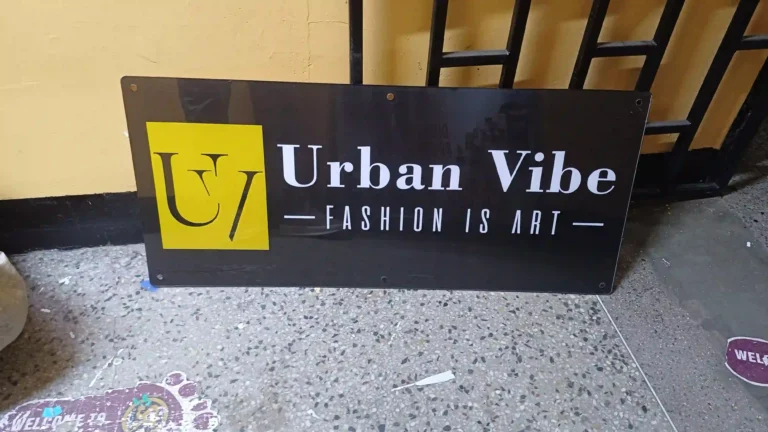
Shop sign made from clear acrylic with a printed clear sticker, by Flexrad

Aluminium composite panel (ACP)

ACP is a flat sheet made of two thin aluminium skins bonded to a core. It is a staple of shopfront fascia boards, sign trays and the backing panels that 3D letters are mounted on.

Best for

  • Fascia and canopy panels
  • Backing panels for 3D letters
  • Flat outdoor signs with vinyl or printed graphics
  • Safety and directional sign panels

Strengths

  • Flat, rigid and light for its size
  • Smooth surface for vinyl and print
  • Can be routed and folded into trays with neat returns

Limitations

  • Dents if knocked
  • Cut edges show the core unless folded or capped
  • Cores differ; where fire performance is a project requirement, the core type must be specified and confirmed with the supplier

Related: 3D signs, safety signs

Stainless steel

Stainless steel is the premium choice for lettering and logos that need to look substantial. It is usually finished brushed or polished and suits corporate receptions, building entrances and halo-lit signs.

Best for

  • Premium 3D letters and logos
  • Reception and lobby signs
  • Plaques and nameplates
  • Halo-lit (back-lit) letters

Strengths

  • High-end appearance that suits corporate brands
  • Strong and rigid
  • Good corrosion resistance, depending on the grade selected

Limitations

  • Usually the most expensive option
  • Heavier, so fixings and wall condition matter
  • Polished finishes show fingerprints; grade selection matters in harsh or coastal environments

Related: 3D signs, reception signs, engraved plaques

Aluminium

Aluminium sheet is light, does not rust and engraves well. It is widely used for plaques, sign plates and road sign blanks, and can be fabricated into letters and frames.

Best for

  • Engraved plaques and nameplates
  • Road, traffic and directional signs (with reflective vinyl)
  • Fabricated letters and returns
  • Lightweight frames

Strengths

  • Light and easy to install
  • Does not rust
  • Takes engraving, paint and powder coating well

Limitations

  • Softer than steel, so it can dent
  • Bare surfaces dull over time without a coating
  • Thin gauges need support over large spans

Related: engraved plaques, road signs
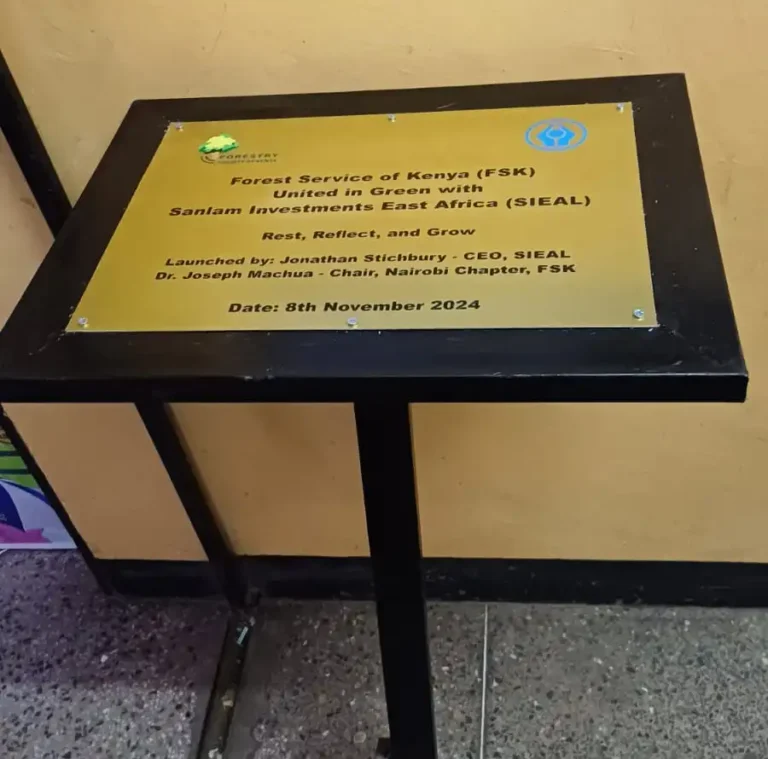
Engraved aluminium plaque mounted on a metal stand, made by Flexrad

PVC foam board

PVC foam board (expanded PVC) is a light, rigid sheet that is easy to cut, print and paint. It is a cost-effective option for indoor signage and short-term displays.

Best for

  • Indoor room, door and wayfinding signs
  • Exhibition and event graphics
  • Budget 3D letters for indoor use
  • Printed safety signs in sheltered areas

Strengths

  • Low cost and lightweight
  • Quick to cut and print
  • Easy to handle and install

Limitations

  • Softer surface marks and dents more easily
  • Can warp or fade in direct sun and heat
  • Not the first choice for long-term exposed outdoor signs

Related: door signs, exhibition booth branding

Mild and galvanised steel

Steel is mostly used for the structure behind a sign rather than the visible face: light box frames, sign posts, stands and supporting brackets. Mild steel is strong and economical but must be painted or powder-coated. Galvanised steel has a zinc coating that adds corrosion protection.

Best for

  • Light box frames and sign cabinets
  • Posts, poles and stands
  • Mounting brackets and sub-frames
  • Stencils for repeated marking

Strengths

  • Strong and rigid
  • Can be welded into custom structures
  • Cost-effective for load-bearing parts

Limitations

  • Heavy
  • Mild steel rusts if the coating is damaged or missing
  • Needs a protective finish outdoors

Related: light box signs, road signs
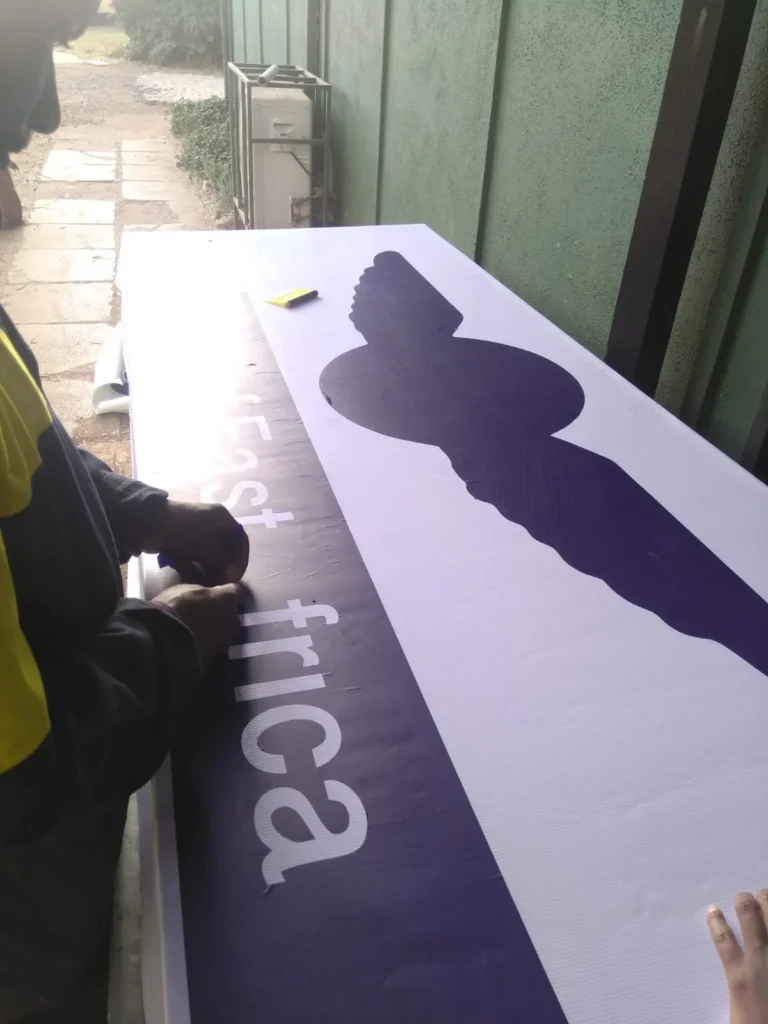
Light box sign frame being fabricated in the Flexrad workshop

Brass

Brass has a warm, gold appearance and engraves crisply, which is why it is a traditional choice for opening, commemorative and dedication plaques.

Best for

  • Opening and commemorative plaques
  • Nameplates and office plates
  • Prestige lettering

Strengths

  • Distinguished, traditional look
  • Fine engraving detail
  • Solid, substantial feel

Limitations

  • Tarnishes over time unless lacquered or polished
  • Heavier and more costly than aluminium

Related: engraved plaques, plaque materials compared
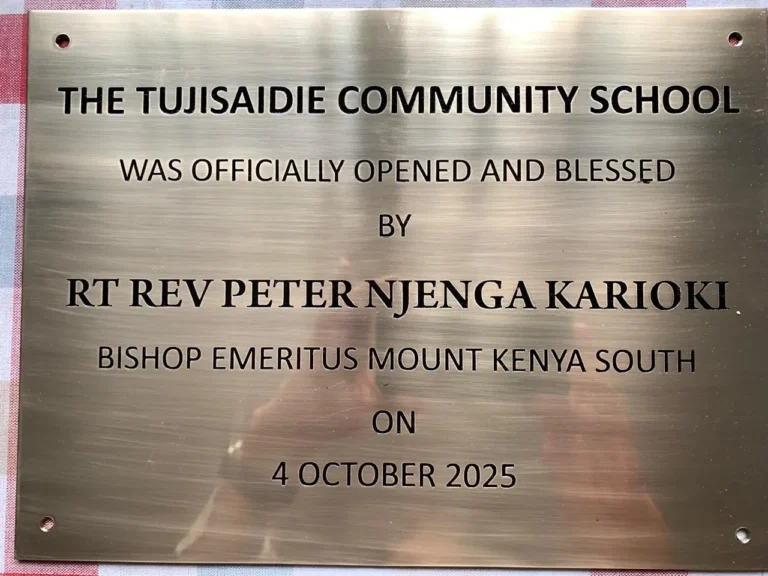
Engraved brass opening plaque made by Flexrad in Nairobi

Self-adhesive vinyl and printed graphics

Vinyl is the most versatile signage material. Cut vinyl produces lettering and logos in solid colours; printed vinyl carries full-colour graphics. It is applied to glass, walls, ACP, acrylic, PVC foam and vehicles, and reflective grades are used for road and safety signs.

Best for

  • Window and glass graphics
  • Safety, OSHA and instruction signs
  • Sign faces on ACP, acrylic and PVC foam
  • Wall and office branding

Strengths

  • Fast to produce and apply
  • Full colour or crisp single-colour lettering
  • Reflective, matte, gloss, clear and frosted options

Limitations

  • Needs a clean, sound surface to adhere properly
  • Durability depends on the vinyl grade and whether it is laminated
  • Not structural; it relies on the surface beneath it

Related: sticker printing, window films, safety signs
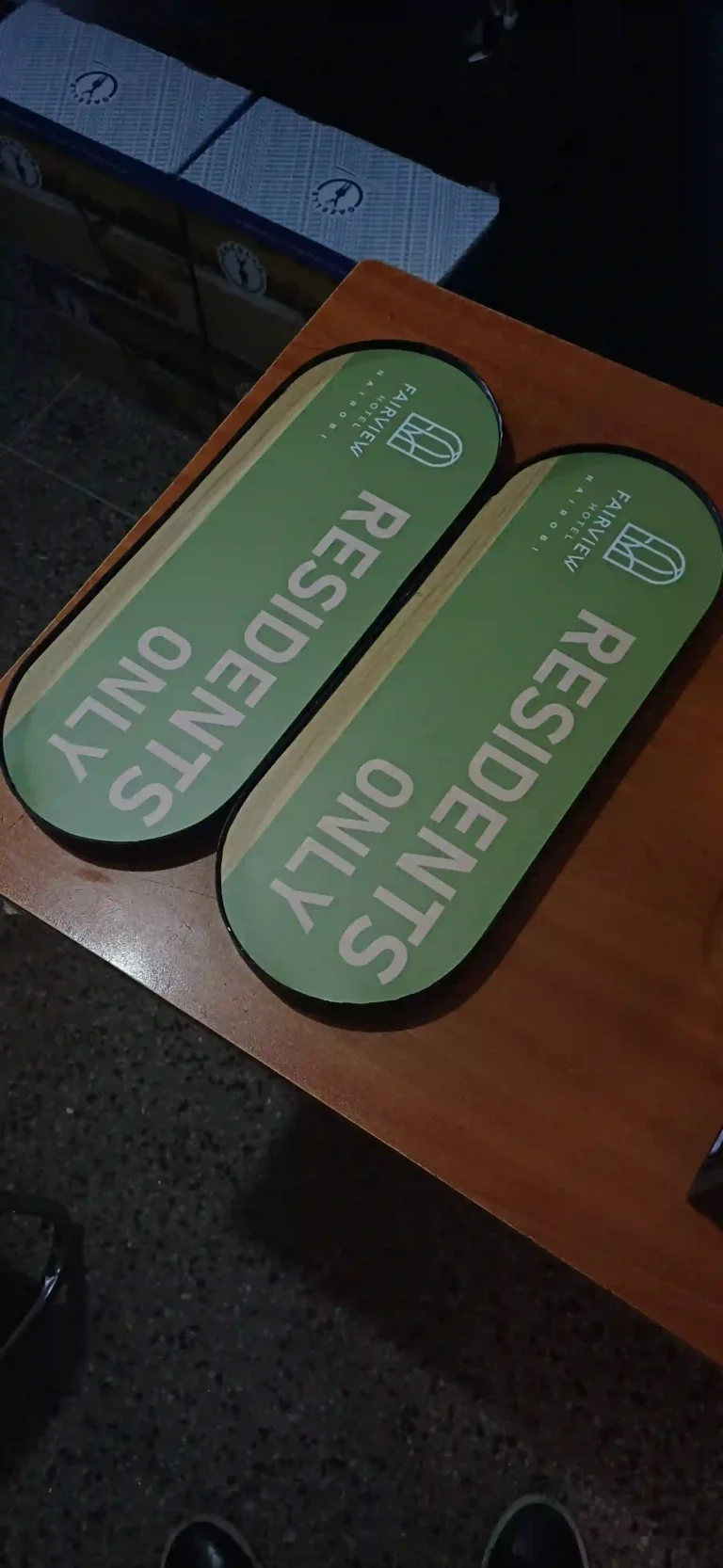
Printed matte vinyl sticker used for business signage

Polycarbonate

Polycarbonate is a transparent plastic that is much tougher than acrylic. It is chosen where a sign may be hit, kicked or vandalised, or where a face must resist breakage.

Best for

  • Signs in high-traffic or vandal-prone areas
  • Protective covers over printed signs
  • Some illuminated sign faces

Strengths

  • Very high impact resistance
  • Can be curved or formed

Limitations

  • Scratches unless hard-coated
  • More expensive than acrylic
  • Edges do not polish to the same finish as acrylic

Related: Ask us whether polycarbonate suits your project; we will confirm availability and recommend alternatives where appropriate.

Material recommendations by sign type

How these materials are usually combined for common business signs.

Shopfront and building signs

An ACP fascia or tray with raised acrylic, aluminium or stainless steel letters is the most common outdoor combination. Add LED illumination if the sign needs to be seen after dark. See 3D signs.

Illuminated light boxes

A steel or aluminium cabinet with an acrylic, polycarbonate or backlit banner face, lit internally with LEDs. The face material affects how evenly the light spreads. See light box signs.

Reception and lobby signs

Acrylic, brushed stainless steel or aluminium logos, flat-mounted or on stand-offs against a feature wall. Indoor conditions allow a wider choice of finishes. See reception signs.

Door, room and wayfinding signs

Acrylic or aluminium plates with vinyl lettering for a durable finish; PVC foam for larger quantities on a tighter budget. See door signs.

Safety and OSHA signs

Printed vinyl on PVC foam suits most indoor locations; ACP or aluminium is better where signs are exposed or likely to be knocked. See safety signs.

Road and directional signs

Aluminium or ACP faces finished with reflective vinyl, mounted on steel posts, for visibility in headlights. See road signs.

Plaques

Brass for a traditional finish, aluminium for value, stainless steel or acrylic for a contemporary look. See engraved plaques.

Exhibitions and events

Banner material on frames, printed vinyl and PVC foam keep booths light, quick to install and easy to transport. See exhibition booth branding.

Indoor vs outdoor performance

The same material can behave very differently inside a reception and on a sun-facing wall.

Outdoor signs need to handle

  • Sun and UV: fades colours and can soften or warp some plastics. Specify UV-stable materials and inks, and laminate printed graphics.
  • Rain and humidity: rusts unprotected steel and lifts poorly applied vinyl. Use coated or rust-resistant metals and sealed joints.
  • Heat: causes expansion, so large panels need suitable fixings and allowance for movement.
  • Dust and pollution: dull finishes over time; smooth surfaces are easier to clean.
  • Wind: loads banners and large panels, so structures and fixings must suit the size and height.
  • Fixings: corrosion-resistant fixings avoid rust stains running down a sign.

Indoor signs can prioritise

  • Finish and detail: polished acrylic, brushed metals and fine lettering read well at close range.
  • Lighter materials: PVC foam and thinner acrylic are often enough indoors.
  • Brand consistency: colour matching across reception, office and door signs.
  • Illumination and LED components: LED modules inside 3D letters or light boxes need suitable power supplies, housing and access for maintenance, indoors or out.

If a sign will sit in a covered but open area, such as a canopy, mall corridor or parking bay, tell us. These in-between locations often decide the material.

Common material combinations

Most commercial signs use more than one material. These pairings are tried and tested.

  • ACP backing panel + acrylic or metal 3D letters: a clean base that frames raised lettering on a fascia.
  • Metal returns + opal acrylic face + LEDs: the build behind many face-lit 3D letters.
  • Steel or aluminium cabinet + acrylic or banner face: the typical light box construction.
  • Clear acrylic + reverse-printed vinyl: graphics sit behind the acrylic and are protected from scratches.
  • Acrylic panel + metal stand-offs: a floating look for reception and door signs.
  • Aluminium or ACP + reflective vinyl + steel posts: standard for road and directional signage.
  • Printed banner + frame: tensioned graphics for booths, backdrops and walls.
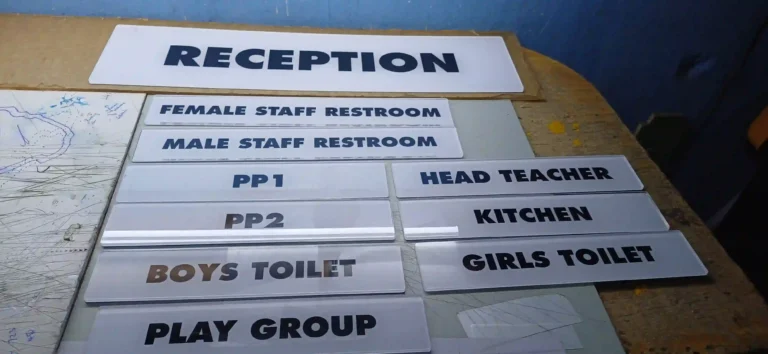
Door signs with reverse-printed clear sticker applied behind clear acrylic
Reverse-printed clear vinyl on acrylic door signs.

What affects the cost of signage materials

Material is only part of the price. These factors usually make the biggest difference.

Size and quantity

Overall dimensions, letter height and the number of signs. Repeat items cost less per piece.

Material and thickness

Metals generally cost more than plastics; thicker or higher-grade sheet costs more again.

Finish

Brushed, polished, painted, powder-coated or printed finishes each add different amounts of work.

Illumination

LED modules, power supplies and the build needed to house them.

Complexity

Detailed logos, fine lettering and fabricated 3D shapes take longer to cut and assemble.

Structure and fixings

Frames, posts, brackets and stand-offs, sized for the sign and wall.

Installation

Height, access, scaffolding or ladders, and location within Nairobi or elsewhere in Kenya.

Design work

Artwork preparation or adapting a logo for fabrication.

For indicative price ranges, read our signage cost guide for Nairobi. A written quote for your project will reflect the exact specification.

What to send for a signage quotation

You do not need a finished specification. The more of these details you can share, the faster and more accurate the quote:

  • Type of sign and what it should achieve
  • Location: indoor, outdoor or covered, and the wall or surface it will be fixed to
  • Approximate size, or a photo of the space with rough measurements
  • Preferred material or finish, if you have one in mind
  • Whether it should be illuminated
  • Your logo or artwork, ideally in vector format (AI, PDF, EPS or SVG)
  • Quantity
  • Whether you need installation, and where
  • Your deadline

Ready to share your brief?

Send it through our quote form, or WhatsApp a photo and a few notes. We will recommend a material and come back with a quotation.

Or WhatsApp +254 751 997 079 / email [email protected]

How Flexrad selects materials and produces your sign

  1. Brief

    We review your location, size, artwork, budget and timeline.

  2. Recommend

    We propose materials and finishes that suit the setting, and explain the trade-offs.

  3. Confirm the specification

    We confirm dimensions, materials and layout with you before production.

  4. Fabricate and install

    We cut, assemble and finish the sign, then install in Nairobi or elsewhere in Kenya if required.

Our workshop uses laser cutting and engraving among other processes. Learn about laser cutting and engraving, or browse recent projects.

Signage materials FAQs

What is the best material for an outdoor business sign?

There is no single best material. For most shopfronts, an ACP panel with acrylic, aluminium or stainless steel letters works well. Stainless steel and aluminium are chosen where a premium finish and corrosion resistance matter; acrylic suits illuminated letters. The exposure, size, budget and whether the sign is lit all affect the recommendation.

Is acrylic the same as Perspex?

Yes. Perspex is a brand name for acrylic sheet (PMMA). In signage, the terms are often used interchangeably.

Can PVC foam board be used outdoors?

It can be used for short-term or sheltered outdoor signs, but it is softer than metal and can warp or fade in strong sun and heat. For long-term exposed signs, ACP, aluminium or acrylic is usually a better choice.

What is the difference between ACP and aluminium sheet?

Aluminium sheet is solid metal. ACP is two thin aluminium skins bonded to a core, which makes large panels flatter and lighter. ACP is common for fascia and backing panels; solid aluminium is common for plaques, sign plates and road sign blanks.

Which materials work for illuminated signs?

Opal acrylic is widely used for letter faces and light box faces because it spreads LED light evenly. Backlit banner material is used on many light boxes, and polycarbonate is used where impact resistance is needed. The frame or letter returns are usually metal.

Will a stainless steel sign rust?

Stainless steel resists corrosion well, but performance depends on the grade, finish and environment. We discuss the right specification for your location before production.

Can you recommend a material if I only have a photo of the space?

Yes. A photo with rough measurements, your logo and a note on whether the sign is indoors or outdoors is enough for us to recommend options and prepare a quote.

Do you install signs outside Nairobi?

Yes. Installation is available in Nairobi and countrywide, and is quoted separately from the sign.

Need help choosing a signage material?

Tell us where the sign is going and what it needs to do. We will recommend materials, explain the trade-offs and send a quotation.